 Skip to content

As someone who’s been online since the mid-1990s, I’m well versed in the ways of fan fiction, personal websites, and sprawling archives devoted to wonderfully specific interests. Twenty or thirty years later, though, I can barely remember most of what I stumbled across, much less the names of the sites themselves.
Chances are, many of those websites don’t even exist anymore. Even the Internet Archive’s Wayback Machine can only do so much. There’s a peculiar sadness in that realization. Those old digital stomping grounds become impossible to revisit. Memories can’t easily be confirmed or disproven because the places that held them have disappeared.
Had I been thinking about the future back then, perhaps I would have saved more. But nobody knew what would become important decades later. Nobody predicted the nostalgia boom of the 2010s or imagined that ordinary fan websites would one day become pieces of digital history.
One of the articles that kicked off my independent research throughout my MLIS program is Dawn Walls-Thumma’s The Fading of the Elves: Techno-Volunteerism and the Disappearance of Tolkien Fan Fiction Archives (2024). It helped me realize that one of the subjects I was most curious about—fun, humor, and play, and how they blend with work and everyday life—was serious business in the research world. Suddenly, my habit of looking up odd bits of information wasn’t something to apologize for; it was already part of scholarly inquiry.
But most importantly, Walls-Thumma reveals that fading is an inevitable part of life, even in the online world. It’s one of the central ideas running through Tolkien’s enduring Middle-Earth. History slips into myth. Great kingdoms become ruins. Languages disappear. Even victories come with the understanding that every age eventually gives way to another.
There is no better personification of this concept than the Elves. The fair and wise race who contributed to the young world eventually find themselves at a crossroads as they contend with an advancing world they cannot reconcile. They are “immortal, not eternal” (Walls-Thumma, 2024, para. 1.1), and to remain in the changing world is to lose themselves, becoming specters of a sort, their consciousness still around, unattached to any physical anchor—watching but never able to touch.
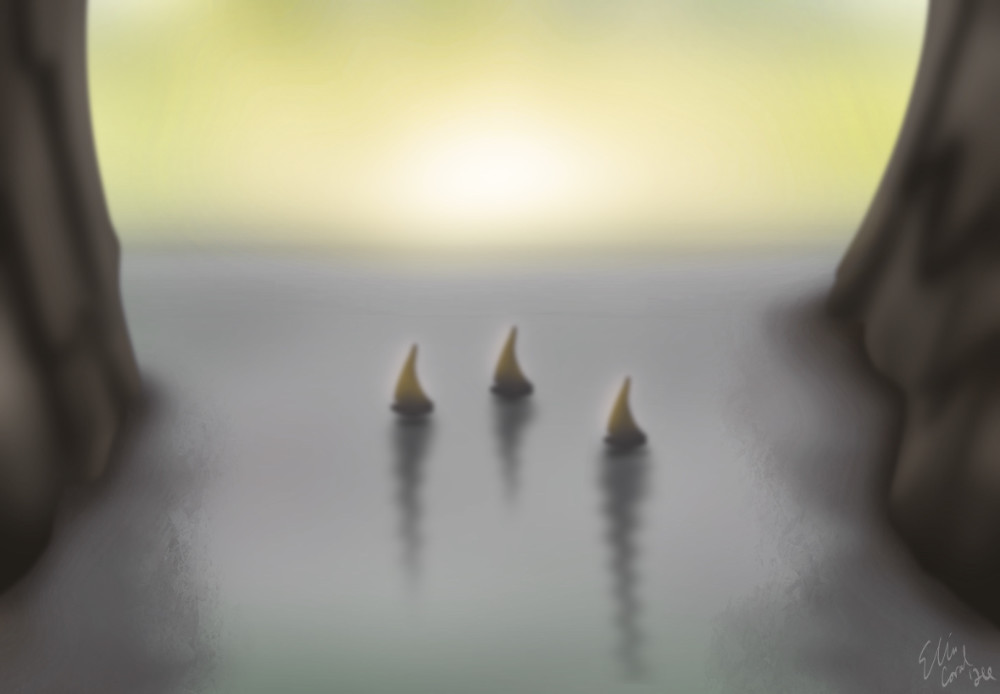
So some sail for the land of Aman where they will continue living as they are, having lost the home they helped form. Either having sailed to another world or wandering as spirits, the Elves are gone.
So how does this tie to fan fiction? Quite a bit, actually. It might not be epic or grand. Losing an online fan archive isn’t the same as watching an immortal people sail into lands few mortals may ever walk. No dark lord is involved. Nobody’s carrying the fate of the world on their shoulders.
But something is still lost. Something is still mourned. Something still speaks to our desire to create, to remember, and to leave traces behind for someone else to discover. It reveals a part of our humanity, our need to create, and our need to remember.
I know you’re just itching for me to start summarizing some juicy academic writing, but just humor this lady curmudgeon as she’s having a rare sweet moment. I’d heard about LOTR fans long before Peter Jackson’s industry- and fandom-changing films, but I didn’t actually start to learn more about the fandom until I was knee-deep in the trilogy (and all three books—I took my initiation into the LOTR world very seriously). Reading this article was the first time I’d heard about LOTR fanzines. God, I wish I could see them, and it makes me wonder if they’ve been preserved or archived.
I briefly mention this to say that fandom has been a part of the Tolkien world long before the internet. In fact, I’d daresay they go hand in hand. Through my voracious reading, consuming of DVD behind-the-scenes materials, documentary viewings, and endless internet searches, I learned that Tolkien was no stranger to fan mail. But hearing that he’d receive fan materials besides the usual letter was a new bit of information (Walls-Thumma, 2024, para. 1.3).
I can’t remember where I’d heard of it, but apparently the American fans were more enthusiastic about the trilogy than any other demographic—with some even calling Tolkien at his own home, begging to learn how the final book ends. The story of the message “Frodo Lives!” spraypainted on a wall or under a bridge stands out the most for me.
But don’t take my word for it. This might be something worth investigating to verify later on. We have an article to read through—an article with a touch of the beauty and thoughtfulness of a Tolkien work. You won’t come across this in too many scholarly articles, so cherish this artistic thought.
As another aside, I wonder what Tolkien would have thought about online fan fiction archives? Would he have been tickled, mildly amused, perturbed? Would he have wished that these writers would have taken a page from his own book and perhaps introduced some class into their lives and studied Old English literature? (By the way, the dual translation of Beowulf is quite the treat if you’re into that kind of thing. Still didn’t add class to my life like I’d hoped, though.)
Walls-Thumma shares her experiences as an elf of the volunteering variety (2024, para. 2.1)—an archive elf. Lured in by the romance of maintaining an online writers’ space, she helped build the Silmarillion Writer’s Guild (SWG) on Yahoo! Groups and LiveJournal in the mid-2000s. The SWG was just among the many fan archives that sprang up during this time.
Figure 1. Timeline of start, active, and end dates for Tolkien fan fiction archives.
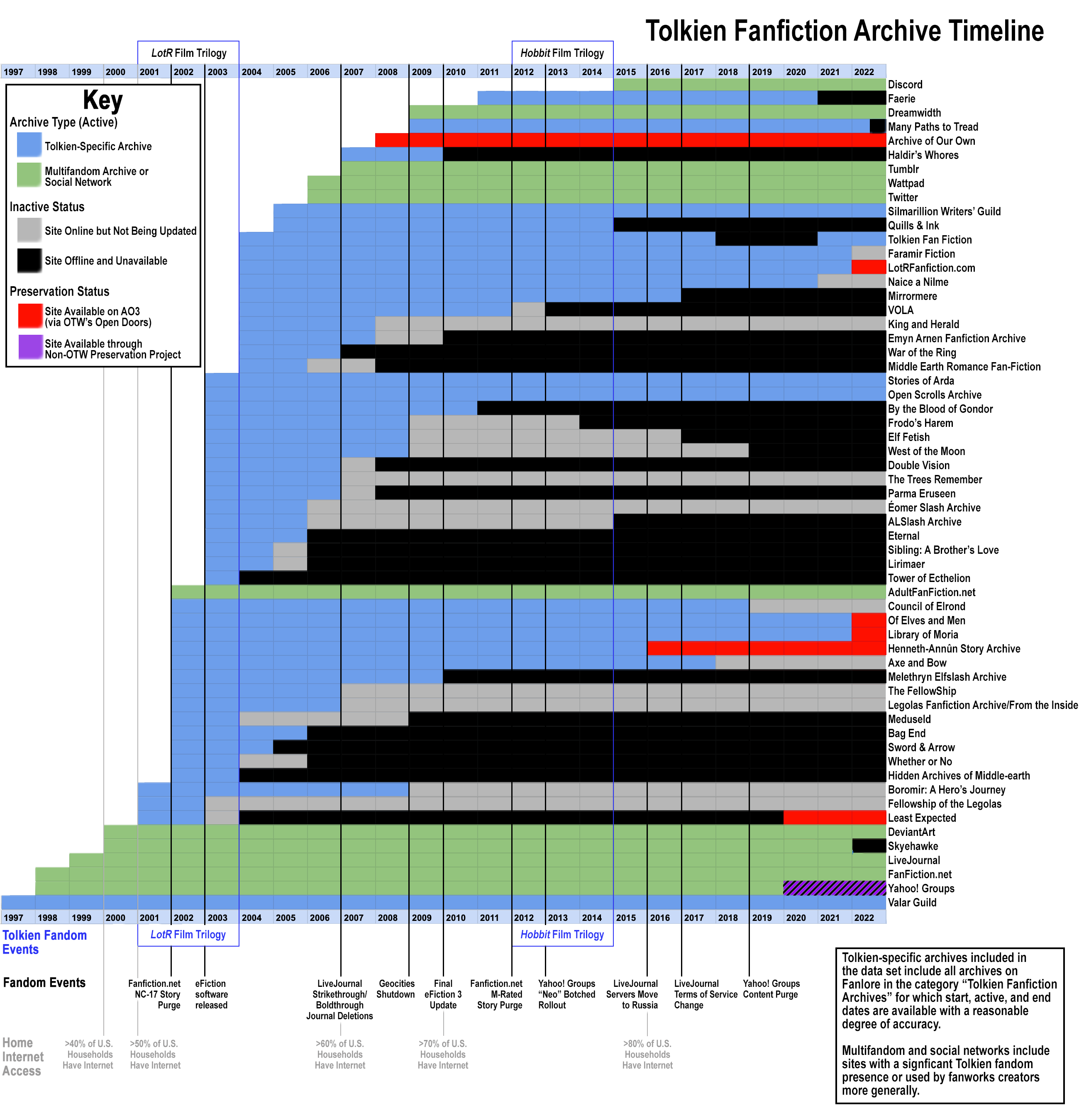
Source: Reprinted from The fading of the elves: Techno-volunteerism and the disappearance of Tolkien fan fiction archives, D. Walls-Thumma (2024), Transformative Works and Cultures, 42. CC BY 4.0.
Why am I not surprised to find that Library of Moria still lives in some form?
I mean, it was such a prominent archive. What Tolkien fan on the internet wouldn’t have heard of it? *cough, cough*
But, yes, Walls-Thumma and countless archive elves took on what Abigail De Kosnik (2016) calls techno-volunteerism—nonprofessional, self-taught work to carry on the passions of a community. Tasks included fixing code, maintaining sites, and never quite letting on that they existed. But this invisibility often resulted in being underappreciated and unnoticed—something I’ve seen time and again among librarians. Much of the work that keeps collections usable is done quietly enough that patrons rarely notice it’s happening at all.
With Peter Jackson’s LOTR trilogy, there was a surge of Tolkien archives. A lot of archive elves got to work in order to meet the insatiable desires of writers wishing to continue the legend, rewrite legend, and bring legitimacy to their favorite pairings (oh, my, was there a lot of the latter). But with technology as it was during the early 2000s, 85% of these archives required manual page coding (Walls-Thumma, 2024, para. 2.5). If you’ve never had to code even a basic HTML/CSS site, you have no idea the dedication it would take to manage several pages of text, designs, and links. With the 2003 release of eFiction (n.d.), an open-source automated archive script, simplified matters for many archivists. Given the fate of many of these platforms, it’s remarkable that the software still around today. Mostly hibernating, but still around.
Sadly, as with many good things on the internet, there was an inevitable decline. Archive elves took on employment, school dominated free time, family obligations became the norm, burnout loomed, entitled community members wore down nerves, and software decays (yes, that’s a thing) reared their mottled heads.
The developers of eFiction stopped updating the core codebase after 2010; PHP upgrades led to eFiction to deteriorate further over time. Platform purges from LiveJournal and Yahoo! Groups, then the centralization through mega platforms like Archive of Our Own (AO3) and Tumblr, leaving smaller archives to struggle and languish (Walls-Thumma, 2024, para. 6.3). Just as the Elves faded from Middle-Earth, so did independent Tolkien fan fiction archives.
But all was not lost. Some of the character of these indie archives managed to survive in some form, albeit through individual stories on these larger platforms. Walls-Thumma herself averted disaster for SWG by learning Drupal so she and her co-administrator could migrate over 3,500 fan works from eFiction (2024, para. 6.4).
Massive archives such as AO3 and the Internet Archive have become invaluable stewards of fan culture. But something is still lost when thousands of smaller archives disappear. Independent archives had personalities. They reflected the tastes of their creators. They cultivated niche communities that might never have flourished on a giant platform. There’s something magical about discovering a tiny corner of the internet devoted to an oddly specific passion shared by only a few thousand people; a modest collection of stories filling a digital library with a big character or greater diversity.
Accessible archiving software may help save these archives from fading, but technology alone can’t save a community. The Wayback Machine can preserve only snapshots. A community is much harder to archive than a webpage. That still takes people willing to become archive elves.
But why save these archives at all? Isn’t fading just part of life? Are things meant to last forever? Do we really get to decide what deserves preserving and what quietly disappears? If you’ve asked any of those questions, congratulations, you’ve just had a taste of Archives and Special Collections 101.
This is probably one of the more beautifully written articles I’ve ever come across. I invite you to read it, and take somber pleasure in the eucatastrophic story of online fan archives.
By the way, eucatastrophic is a term Tolkien coined (Tolkien Gateway, n.d.). That’s your vocabulary word for the day. Try to find a use for it.
References
De Kosnik, A. (2016). Rogue archives: Digital cultural memory and media fandom. The MIT Press.
eFiction. (n.d.). https://efiction.org/
Tolkien Gateway. (n.d.). Eucatastrophe. Retrieved July 9, 2026, from https://tolkiengateway.net/wiki/Eucatastrophe
Walls-Thumma, D. (2024, March 14). The fading of the elves: Techno-volunteerism and the disappearance of Tolkien fan fiction archives. Transformative Works and Cultures, 42. https://doi.org/10.3983/twc.2024.2467